

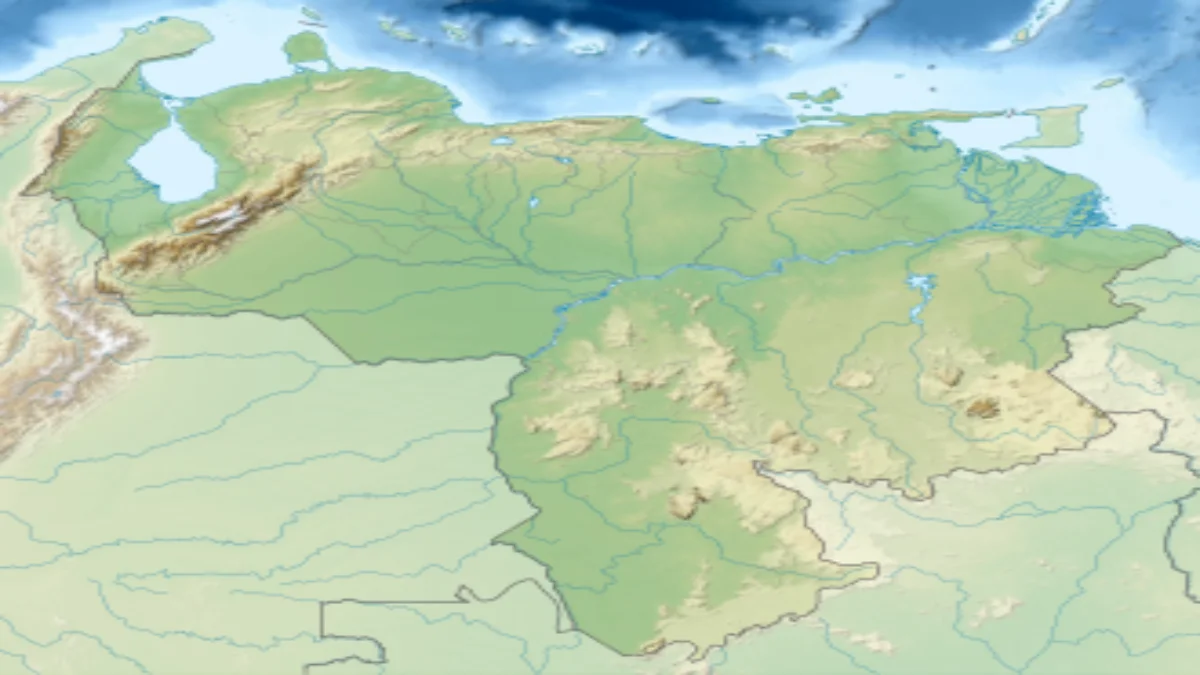
Thirty-Nine Seconds That Changed Everything
It was a Wednesday afternoon in Venezuela, the 24th of June—a national holiday, the Battle of Carabobo, when families gather instead of commuting to offices. At 18:04 VET, the ground beneath northwestern Venezuela began to move. An Mw 7.2 earthquake tore through the San Sebastián fault system, its epicenter near the quiet town of San Felipe, Yaracuy. Before anyone could comprehend what had happened, thirty-nine seconds later, a second, larger rupture followed—an Mw 7.5 mainshock that would make the first tremor seem almost like a warning. The two earthquakes, together lasting roughly ninety to one hundred and twenty seconds, would leave the country reeling: over 1,430 dead, more than 3,238 injured, and a staggering 68,900 people missing in the chaotic days that followed. The USGS PAGER system, designed to predict earthquake impacts, warned that the final toll could potentially exceed 100,000.
The Fault That Has Waited Centuries
Northern Venezuela does not sit on a single, clean fault line. Instead, it lies within a broad, transpressional boundary zone where the Caribbean Plate and the South American Plate collide and slide past one another. The principal structure here is the Boconó–San Sebastián–El Pilar fault system, a right-lateral strike-slip network stretching more than 1,300 kilometers from the Venezuelan Andes to Trinidad. For centuries, this boundary has been accumulating stress at roughly 10 millimeters per year—the slow, imperceptible grinding of continents that, on a holiday afternoon, finally released its grip.
The San Sebastián Fault itself runs mostly offshore along north-central Venezuela, north of the Venezuelan Coastal Range, with a short onshore segment near Simón Bolívar International Airport known locally as the Bruscas Fault. This same system has hosted major historical earthquakes in 1641, 1766, 1812, and 1967. A 2015 marine seismic study linked the devastating 1900 San Narciso earthquake—an Mw 7.6 event—to a rupture on the eastern San Sebastián Fault. The fault, in other words, has a long and violent memory. On June 24th, 2026, it remembered again.
Two Shocks, One Rupture, Ninety Seconds of Terror
The first shock—an Mww 7.2 foreshock—struck at 22:04 UTC east-northeast of Yumare, at a depth of about 20 kilometers. The USGS identified it as right-lateral strike-slip faulting on an east-west trending fault, the kind of motion that makes the ground shake sideways, as if the earth itself were shrugging. Thirty-nine seconds later, the Mww 7.5 mainshock hit directly east of the first rupture, at a shallower depth of just 10 kilometers. Both epicenters lay within the Veroes municipality in Yaracuy state, but the energy traveled far beyond.
What seismologists found remarkable was how the two events blurred together. Italy’s National Institute of Geophysics and Volcanology (INGV) analyzed satellite displacement data and concluded that the ground deformation was essentially indistinguishable between the two shocks. Their model combined them into a single Mw 7.6 event, with rupture propagating toward Caracas at 3 to 3.5 kilometers per second. The first episode produced up to 2.5 meters of slip at 20 kilometers depth; the second, occurring 30 to 40 seconds later, released the greatest energy offshore north of Catia La Mar, with maximum slip reaching 3.6 meters at just 11 kilometers depth. The entire rupture, according to the USGS, spanned roughly 230 by 40 kilometers and lasted more than 90 seconds.
The Capital Crumbles
Because June 24th was a national holiday, many Venezuelans were at home when the buildings began to sway and collapse. In Caracas, the damage was catastrophic. The municipalities of Los Palos Grandes and Altamira were described by Interior Minister Diosdado Cabello as the worst-affected parts of the city. At the Petunia Residences in Los Palos Grandes, 14 floors partially collapsed, leaving only six intact. In Altamira, three buildings fell, including a 22-storey tower that pancaked completely. Another 30 buildings in the district were heavily damaged. In the eastern municipality of Chacao, Mayor Gustavo Duque confirmed deaths and injuries, with two buildings collapsed and many trapped beneath the rubble.
But the true horror lay north of the capital, in La Guaira. Acting President Delcy Rodríguez designated the area a disaster zone within hours. More than 1,400 buildings were destroyed in the state alone. The main airport serving Caracas, Simón Bolívar International, was heavily damaged, and all flights were canceled. An independent database reported over 11,200 people missing in La Guaira alone. Helicopter footage revealed entire neighborhoods—Playa Grande, Tanaguarenas, Los Corales—flattened into indistinguishable piles of concrete and rebar. Telecommunications across the city went dead. By the second day, rescue teams were still reporting that hundreds, possibly thousands, remained buried beneath collapsed structures.
The Numbers That Don’t Tell the Whole Story
The official figures, as they emerged, were both devastating and incomplete. At least 1,430 people were confirmed dead, with over 3,238 injured. But the missing persons count—68,900 and climbing—told a darker story. The government acknowledged only hundreds missing, while the United Nations reported that more than 50,000 people remained unaccounted for. Health Minister Carlos Alvarado clarified that casualty numbers reflected only those recorded at hospitals, meaning the true toll in remote areas—where communications had failed or where a media blackout may have been imposed—remained unknown.
The United Nations Development Programme estimated damage at US$4.7 to 8.7 billion, roughly 4 to 8 percent of Venezuela’s GDP. They noted that the true cost, including infrastructure loss and long-term economic disruption, could be 1.5 to three times higher. Their assessment identified 1.7 million buildings in the affected areas, many exposed to violent shaking. The USGS PAGER system had predicted exactly this: for the Mw 7.5 mainshock, it estimated a 44% probability of 10,000 to 100,000 deaths and a 23% probability of more than 100,000. The numbers were not just statistics; they were probabilities of human absence, of kitchens that would never be used again, of bedrooms buried under tons of concrete.
Among the dead were foreign nationals caught in the collapse: two Brazilians, six Spaniards, a Dominican, eight Chinese citizens, one Chilean, and 28 Portuguese. Four Italian-Venezuelans also perished. The earthquake did not discriminate by passport.
When the State Faltered, the People Moved
What happened in the hours after the earthquake revealed as much about Venezuela as the disaster itself. In La Guaira, volunteers—many of them residents searching for their own neighbors—began digging through rubble with their bare hands almost 24 hours after the quakes, as heavy equipment and machinery remained scarce and government assistance limited. The José María Vargas Hospital was overwhelmed; casualties were treated outdoors, and some died en route to already-full facilities. A military supply line was established outside the city’s stadium, but the sheer volume of need dwarfed what could be provided.
Civilians from Valencia and Caracas drove through the night along the Caracas–La Guaira highway, bringing food, clothes, and water. They created donation accounts for international donors. But the government, through National Assembly President Jorge Rodríguez, asked citizens to channel supplies through authorities rather than delivering them directly, ostensibly to prevent road congestion. By the night of June 26th, access to La Guaira was restricted to authorized personnel only. Justice Minister Cabello defended the measure as necessary for ambulance access and public health, though he offered little elaboration on the latter.
The Aftershock That Took a Bridge
On June 26th, a magnitude 4.7 aftershock caused additional damage in Caracas and, critically, collapsed the bridge connecting the parish of Caraballeda to the rest of La Guaira. The structure had probably been weakened by the mainshocks; the aftershock finished it. Relief efforts were disrupted precisely where they were most needed. More than 130 aftershocks were recorded in total, the largest measuring Mww 4.8. Six were felt in Caracas within the first two hours alone.
The shaking had traveled far beyond Venezuela’s borders. Tremors were reported in Bogotá, northeastern Colombia, and northern Brazil—including Manaus, Belém, and Macapá—triggering evacuations. The ABC islands of Aruba, Bonaire, and Curaçao felt the ground move, as did parts of the Dominican Republic, including Santo Domingo. The fault had spoken, and half the Caribbean had listened.
Names in the Rubble
Among the notable victims were Yimvert Berroterán, a Venezuelan footballer; politician Milagros Eulate; Isabel Jara, a Spanish-Venezuelan civil servant; politician Richard Peñalver; actress and comedian Gabriela Fleritt; and four members of the Venezuelan band Van Der Dijs—Manuel van Der Dijs, Gabriel Gómez, Xander Hernández, and Abraham Foucault. They were not statistics. They were musicians, public servants, athletes, and artists who happened to be in the wrong buildings at the wrong thirty-nine seconds.
As rescue convoys from Mexico, El Salvador, and the Dominican Republic arrived on June 26th, and as over 1,600 foreign rescuers joined more than 14,000 deployed military personnel, the scale of the disaster became clearer. But so did the gaps. Firefighters, military, and police were present only in limited areas even a day after the earthquake. The government eventually established a volunteer registration center at Poliedro de Caracas, but for many, the bureaucracy of aid felt as immovable as the tectonic plates themselves.
Relatives turned to social media, posting digital flyers on WhatsApp, Facebook, Instagram, and X—sharing photographs of the missing in the hope that someone, somewhere, had seen them. But social media restrictions imposed by the government made the search agonizingly difficult. On June 26th, the United Nations appealed to ease those restrictions. X was subsequently made accessible. In a disaster, information is as critical as water; Venezuela’s government had, however briefly, treated it as a threat.
The Ground That Remembers
Seismologists at Peking University modeled the earthquake as a single Mw 7.61 event, rupturing asymmetrically across a 210 by 40 kilometer area, propagating mainly eastward with slip concentrating at shallow depths. Most of the displacement occurred 60 to 130 kilometers east of the epicenter, peaking at 4.49 meters some 70 kilometers away. The greatest energy release came 20 to 80 seconds after initiation, continuing for 90 seconds. The numbers are precise. The suffering they represent is not.
The San Sebastián fault system will continue its slow, relentless motion—10 millimeters per year, the pace of a fingernail growing, the pace of a continent forgetting. But on a holiday afternoon in June, it moved faster than any human could run, and in ninety seconds, it erased decades of architecture, thousands of lives, and whatever remained of the illusion that the ground beneath Venezuelan feet was solid. The ginkgo tree survives Hiroshima; the San Sebastián fault survives everything. What remains between those two truths is the work of rescue, the counting of the dead, and the long, uncertain wait for the missing who may never come home.
The Story They Gave Us, and the Questions They Didn’t
Every disaster narrative arrives pre-packaged. Someone has already decided which numbers matter, which images you will see, and which voices will speak. The 2026 Venezuela earthquakes are no exception. The data material—the document from which the preceding article was drawn—presents itself with the confidence of Wikipedia: timestamps, magnitudes, casualty counts, all arranged in neat tables and declarative sentences. But journalism is not transcription. It is interrogation. And when you begin to interrogate this document, the gaps open like fissures in the earth itself.
The Thirty-Nine Seconds That Wasn’t
The data states, with absolute certainty, that the foreshock and mainshock were thirty-nine seconds apart. It appears in the lead. It is treated as a hard fact, a precision that lends the narrative its urgency. But look closer at the scientific models the same data cites, and the certainty crumbles.
Italy’s INGV says the “second episode of energy release occurred 30 to 40 seconds later.” Peking University says “the greatest energy release occurred some 20–80 seconds after the rupture initiated.” The USGS says “a second larger rupture initiated 10 seconds after the initiation of the first with its peak energy release 40 seconds after the sequence began.” So which is it? Thirty-nine seconds between what? Between the first perceptible shaking and the second? Between the initiation of rupture on the fault plane? Between the peak energy release of each event? The data never clarifies. It treats “thirty-nine seconds” as a single, indivisible fact when the scientists themselves cannot agree on what the interval measures.
The question the data refuses to answer: If the USGS says 10 seconds between initiations and 40 seconds to peak, and INGV says 30-40 seconds between episodes, and Peking says 20-80 seconds to greatest energy release, then where does “thirty-nine seconds” come from? Is it an average? A rounded figure? A journalistic convenience? The data presents it as seismological truth. It is, at best, a compromise between incompatible models. At worst, it is a number chosen for narrative rhythm rather than scientific accuracy.
The Photographs That Took Themselves
The data mentions “CCTV footage of the second earthquake in La Pastora Parish” and “images on social media showed dozens of buildings collapsed.” It mentions “video from a helicopter” showing flattened neighborhoods. It mentions the French embassy and the Venezuelan Red Cross headquarters as “severely damaged.” But here is what it never asks: Who was holding the camera?
CCTV systems run automatically. We can accept that. But the social media images? Someone had to be standing in rubble, phone in hand, while buildings were still falling or had just fallen. The data never names these citizen-journalists. It never explains how they survived when others in the same buildings did not. If the French embassy was “severely damaged,” who photographed it? Was it a surveillance feed from before the collapse? Did someone walk into a collapsing diplomatic building to get the shot? The data treats these images as self-generating, as if they emerged from the disaster without human agency. They did not. Every photograph has an author. Every author had a reason to be there, and a reason to survive. The data is silent on both.
The question the data refuses to answer: If the earthquake struck at 18:04 and 18:05 VET, and telecommunications were disabled across La Guaira, and the airport was closed, and access was restricted to authorized personnel by June 26th—then who uploaded the “images on social media” in the critical first hours? Were they uploaded from Caracas, where networks still functioned? From satellite phones? From the ABC islands, where tremors were felt but buildings stood? The data says “images on social media” as if the platform itself generated the content. It did not. Someone chose to film rather than flee. The data never asks who, or why.
The Missing Persons Black Hole
Here is where the data material becomes not merely incomplete but structurally evasive. The government says “hundreds” missing. An “independent database” says 68,900+. The UN says 50,000+. The data notes this discrepancy. It even calls it a “darker story.” But it never resolves it. It never names the independent database. It never explains its methodology. It never asks who maintains it, who funds it, or how it counts.
If 68,900 people are missing, where are their families? The data says relatives posted on social media. But 68,900 digital flyers would overwhelm any platform. The data mentions “many websites independently created to report the missing“—but who created them? Were they centralized? Distributed? Verified? The data says “an independent database said more than 11,200 people were missing in the state alone”—but this is the same data that, two paragraphs earlier, said 68,900+ were missing nationwide. Is the 11,200 a subset? A different count? A different database? The data does not say.
The data mentions that “social media restrictions in the country by the government made the search for missing people challenging.” It notes that the UN appealed to ease restrictions, and that X was “subsequently accessible.” But it does not ask: If social media was restricted, how were 68,900 missing persons reported on it? Were the reports submitted before the restriction? After? Through VPNs? Through foreign accounts? The data treats the restriction and the reporting as simultaneous facts without explaining their coexistence.
And here is the deeper question: If the government acknowledges only hundreds missing, and an independent database claims 68,900+, what explains the gap of 68,000+ people? Are they dead but uncounted? Trapped but unreported? Migrated but unverified? The data notes the discrepancy as if it were a curiosity. It is not. It is the central mystery of the disaster. Every missing person is either dead, displaced, or deliberately erased. The data does not pursue which.
The question the data refuses to answer: Who maintains the “independent database” of 68,900+ missing? What is its URL? Who funds it? What verification process does it use? If the government claims only hundreds missing, and the UN says 50,000+, and the database says 68,900+, which number is being used for international aid appeals? For insurance claims? For historical record? The data treats these as parallel truths. They are not. They are competing narratives with political consequences.
The Foreign Dead Who Cannot Speak
The data lists foreign dead with bureaucratic precision: two Brazilians, six Spaniards, a Dominican, eight Chinese citizens, one Chilean, 28 Portuguese, four Italian-Venezuelans. It notes that “the earthquake did not discriminate by passport.” This is true but trivial. The deeper question is: What were they doing in Venezuela?
Twenty-eight Portuguese dead. Six Spaniards. Eight Chinese. These are not tourist numbers. Venezuela in 2026 was not a tourist destination. Were they businessmen? Diplomats? Engineers? Medical staff? The data does not say. It treats their nationalities as sufficient identification. They are not. A Portuguese construction worker in a collapsed building and a Portuguese diplomat in the French embassy are different stories. The data conflates them into a single, sympathetic sentence about passports.
And the 133 Spaniards missing—where were they? The data says “according to the Spanish government.” But the Spanish government, like the Venezuelan government, has reasons to undercount or overcount. The data does not interrogate those reasons. It reports the number as if it were neutral.
The question the data refuses to answer: If 28 Portuguese citizens died, and 85 were missing, what was the Portuguese community in Venezuela doing in the buildings that collapsed? Were they concentrated in specific neighborhoods? Specific professions? The data lists them as a statistical category. They were human beings with reasons to be in specific places at 18:04 VET. The data does not ask what those reasons were.
The Hospitals That Were Already Broken
The data tells us that “many hospitals have been strained by the high influx of injured, and were already facing manpower, supply, and equipment shortages before the disaster.” It notes that “it is common for patients to provide their own supplies.” It tells us that at one facility, “all its emergency supplies were depleted within four hours.” But it does not ask: Why?
Venezuela’s healthcare collapse did not begin on June 24th, 2026. It was years in the making. The data treats the pre-existing shortages as context, as background noise. They are not. They are the story. If a hospital cannot stock bandages in peacetime, what does it mean that it failed in disaster? The data says patients provided their own supplies. But where did they get them? Black markets? Hoarding? Relatives who drove from other cities? The data mentions “residents began donating their own supplies” as if this were spontaneous generosity. It may have been. But it may also have been the only functional healthcare system left—private citizens improvising where the state had already abdicated.
The question the data refuses to answer: If the health ministry activated eight hospitals and twelve private facilities for triage, but “many hospitals have been strained” and “it is common for patients to provide their own supplies,” then what did “activation” actually mean? Did the government provide additional redatas? Or did it simply designate existing, depleted facilities as “activated” and call it a response? The data uses the language of official action—”activated,” “deployed,” “designated”—without examining whether action followed the language.
The Government That Restricted and Rescued
The data tells us that “the government later restricted access to the city on the night of 26 June, only giving access to authorized personnel.” It tells us that Justice Minister Cabello “defended the restriction to clear roadways for ambulances and for health reasons but did not elaborate on the latter.” It tells us that “the sheer number of non-government response and volunteers arriving from elsewhere worsened the chaos in the state.” But it does not ask the obvious question: If volunteers were the primary rescue force in the first 24 hours, why were they suddenly the problem?
The timeline matters. Volunteers dug with their hands for a day because machinery and government assistance were scarce. Then the government restricted access. Then it deployed 14,000 military personnel and 100+ pieces of machinery. Then it established a registration center. The data presents this as a logical sequence: chaos, then order. But it may have been something else. It may have been the state asserting control over a narrative that had, for 24 hours, escaped it. The volunteers had shown that Venezuelans could organize without the government. The restriction may have been as much about controlling information as clearing roads.
The data mentions that “social media restrictions in the country by the government made the search for missing people challenging.” It mentions the UN appeal. It mentions X becoming accessible. But it does not ask: If the government could restrict and then un-restrict social media, what else could it control? The casualty figures? The missing persons counts? The images that reached the international press? The data treats the social media restriction as a minor inconvenience. In a disaster where 68,900 people are missing and the primary search method is digital flyers, it is not minor. It is structural.
The question the data refuses to answer: If the government restricted access to La Guaira on June 26th, and restricted social media throughout the crisis, and the casualty figures from La Guaira were “not yet verified or added to the total,” then who controlled the information that did reach the public? The data mentions Telesur reporting from San Bernardino. It does not mention who Telesur is, or who funds it, or whether its reporters had unrestricted access while independent volunteers did not. Information is not neutral in a disaster. The data treats it as if it were.
The Magnitudes That Multiply
The data presents multiple magnitude estimates without explaining their divergence. The USGS says Mw 7.2 and 7.5. The GFZ says 7.3 and 7.4. The INGV combines them into 7.6. GEOSCOPE reports a single 7.8. Peking University models 7.61. The data lists these as if they were footnotes to a settled truth. They are not. They are fundamentally different accounts of the same event.
A 7.2 and a 7.5 are two earthquakes. A 7.6 is one. A 7.8 is something else entirely. The difference between 7.5 and 7.8 is not decimal. It is a factor of roughly 5.6 in energy release. The data says the mainshock “is the largest in Venezuela since 1900” if it is 7.5. If it is 7.8, it is larger than anything in the historical record. The data does not resolve this. It does not ask why agencies disagree. It does not explain that different agencies use different methods: body waves, surface waves, moment tensors, finite fault models. It simply lists the numbers and moves on.
The question the data refuses to answer: If the USGS, GFZ, INGV, GEOSCOPE, and Peking University cannot agree on whether there were two earthquakes or one, whether the magnitude was 7.2 or 7.8, then what number is being used for insurance claims? For international aid? For historical record? The data treats scientific disagreement as a curiosity. In a disaster where damage estimates range from $4.7 to $8.7 billion, the difference between 7.2 and 7.8 is not academic. It is financial. It is political. It is the difference between reconstruction and abandonment.
The Notable Victims and the Invisible Ones
The data names its notable victims with precision: Yimvert Berroterán, Milagros Eulate, Isabel Jara, Richard Peñalver, Gabriela Fleritt, the four members of Van Der Dijs. It is right to name them. They were human beings, not numbers. But the data does not ask: Why these names and not others?
Berroterán was a footballer. Eulate and Peñalver were politicians. Fleritt was an actress. Jara was a civil servant. The band members were musicians. They are notable because they were public figures. But what of the 1,430+ confirmed dead who were not? The data mentions “at least four collapsed buildings in Caracas were residential high-rises.” It mentions the Petunia Residences, where 14 floors partially collapsed. How many people lived in those 14 floors? The data does not say. It names the building but not its inhabitants. It names the politician but not the constituent.
The question the data refuses to answer: If the Petunia Residences lost 14 of 20 floors, and the 22-storey tower in Altamira “pancaked completely,” and “almost all high-rise buildings were heavily damaged or destroyed” in an unspecified southeastern area of Caracas, then how many anonymous dead are buried in the gap between “1,430+” and the named few? The data names 11 notable victims. It confirms 1,430+ dead. That leaves 1,419+ people who died without becoming notable. Who were they? Where did they live? Why did their buildings fall when others stood? The data does not ask. To ask would be to investigate, and the data is not an investigation. It is a compilation.
The GDP That Measures Ruin
The data tells us the damage is estimated at US$4.7 to 8.7 billion, “roughly 4-8 percent of Venezuela’s GDP.” It tells us the UN says the true cost could be “1.5 to three times that estimate.” It tells us this does not include “infrastructure loss, long-term economic disruption and reconstruction.” But it does not ask: Whose GDP?
Venezuela’s GDP in 2026 was not a neutral figure. It was the product of years of economic collapse, hyperinflation, sanctions, and political crisis. “4-8 percent” of a collapsing economy is not the same as “4-8 percent” of a stable one. The data treats the percentage as a universal measure. It is not. It is a measure of ruin added to existing ruin. If a country already cannot import medicine, what does it mean that it must now import concrete?
The data mentions that the estimate is based on “losses to housing and economic assets.” But who owned those assets? The state? Private citizens? Foreign investors? The data does not say. In a country where property rights have been politically contested for decades, the question of who owned what is not administrative. It is existential. If the state owns the buildings, the state decides whether to rebuild. If private citizens own them, they must rebuild themselves—or leave. The data does not pursue this. It treats housing loss as a number.
The question the data refuses to answer: If the UN estimates $4.7-8.7 billion in damage, and the true cost could be 1.5 to 3 times higher, and Venezuela’s economy was already in collapse, then who will pay? International aid? Domestic taxation? Debt? The data mentions “donation accounts for potential international donors” created by civilians. It does not mention any government fundraising. It does not mention insurance. It does not mention reconstruction bonds. It presents the damage as a fait accompli, a number to be recorded, rather than a crisis to be resolved.
The Aftershock That Wasn’t Finished
The data tells us that a magnitude 4.7 aftershock on June 26th “caused additional damage to buildings in Caracas and the bridge connecting the parish of Caraballeda to the rest of La Guaira to collapse, disrupting relief efforts.” It says the bridge “had probably been weakened by the mainshocks; the aftershock finished it.” This is plausible. But it is also convenient. A 4.7 aftershock is not a large earthquake. It is roughly 1,000 times smaller than the 7.5 mainshock in energy release. If a bridge collapsed because of it, the bridge was either catastrophically damaged by the mainshocks or catastrophically maintained before them.
The data does not ask which. It treats the aftershock as the cause because the aftershock was the immediate trigger. But causation is not correlation. If the bridge was structurally unsound before June 24th—and in a country with infrastructure deficits, this is not speculative—then the aftershock was not the cause. It was the final straw. The data does not pursue this. It does not ask when the bridge was last inspected. It does not ask who built it. It says “the aftershock finished it” and moves on.
The question the data refuses to answer: If a 4.7 aftershock collapsed a bridge that had withstood a 7.5 mainshock 48 hours earlier, was the bridge already failing? And if it was already failing, how many other bridges in the affected area are in similar condition? The data mentions “disrupting relief efforts” as if the bridge’s collapse were an unfortunate coincidence. It may have been. But it may also have been a symptom of systemic neglect that predated the earthquake by years.
The Document That Documents Itself
At the top of the data document, there is a warning: “This article is about a recent earthquake where information can change quickly or be unreliable. The latest page updates may not reflect the most up-to-date information.” This is the only moment of epistemological honesty in the entire text. It admits that what follows is provisional. But the rest of the document does not read as provisional. It reads as definitive. Timestamps to the second. Magnitudes to the decimal. Casualty counts with plus signs, as if the plus were precision rather than admission of uncertainty.
The data is not a lie. It is something more common and more dangerous: a compilation that mistakes accumulation for verification. It gathers numbers from agencies that disagree. It lists images without photographers. It names victims without contexts. It notes discrepancies without resolving them. It presents the language of official action—”activated,” “deployed,” “designated,” “restricted”—without asking what those words meant on the ground.
And now, in the interrogation, we must ask what we have done. The preceding article—the narrative you read before this one—took this data and shaped it into story. It added rhythm. It added image. It added the ginkgo tree as metaphor, a gesture toward literary meaning. But in doing so, it inherited every gap the data contained. The thirty-nine seconds. The unnamed photographers. The 68,900 missing without methodology. The foreign dead without context. The hospitals that were already broken. The government that restricted and rescued in the same breath. The magnitudes that multiplied. The GDP that measured ruin without asking who would pay. The aftershock that finished what neglect had started.
Every story is a selection. Every selection is a silence. The question is not whether to select—without selection, there is no narrative—but whether to acknowledge the silences we create. The data does not. The narrative article, in its flow and its images and its bolded key phrases, does not either. This interrogation is an attempt to do what both failed to: to ask the questions that the facts imply but do not answer.
The San Sebastián fault will move again. The ground will shake. Someone will compile the numbers. Someone will write the narrative. And someone, if they are doing journalism rather than transcription, will ask: Who took the photograph? Who counted the missing? Who controlled the access? Who paid for the ruin? And why, in a document of thousands of words, are the only certain things the things that cannot be verified?


